(Page 31 of 41)
God Creates Life on Earth
Origins Page 74
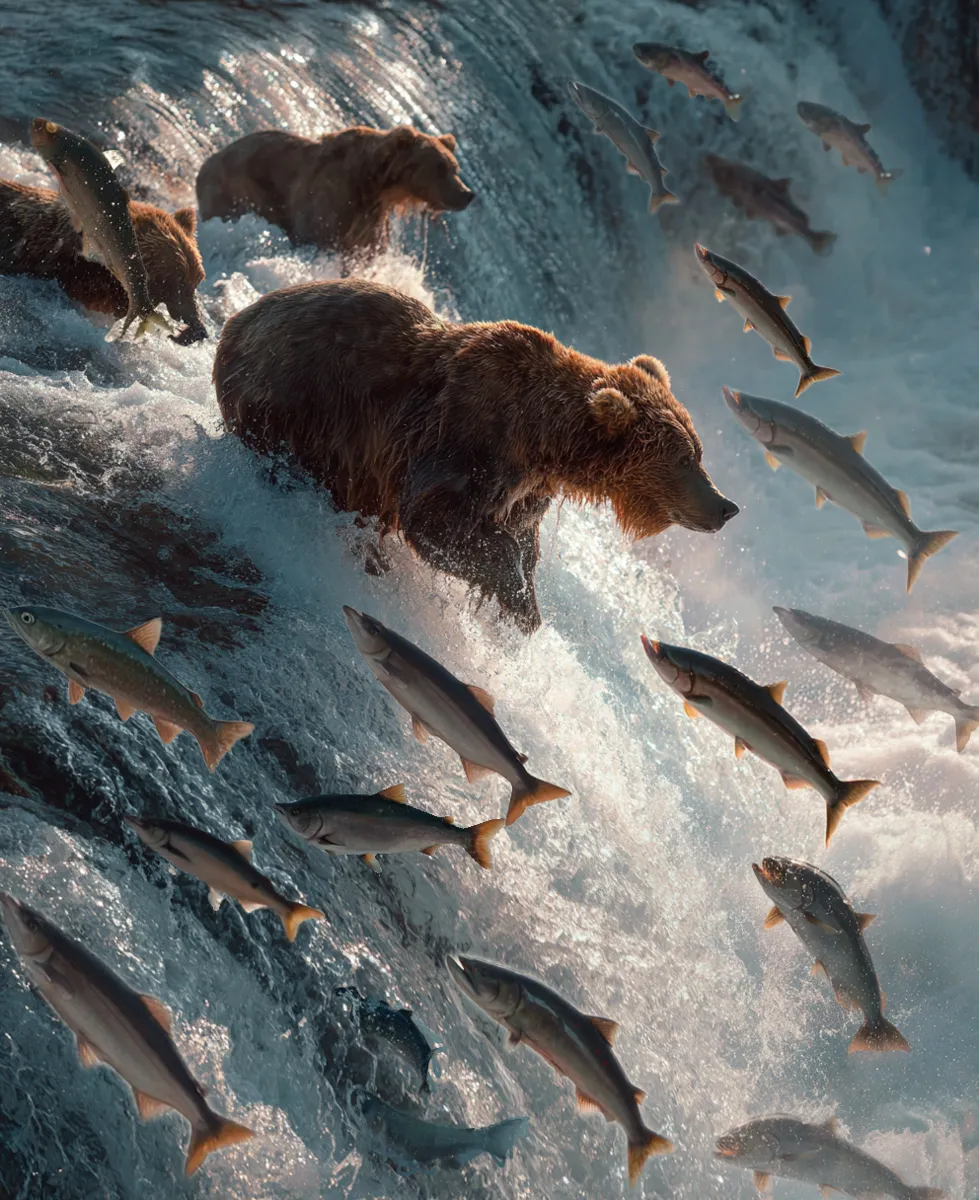
precisely suited to the role it fulfills, quietly reinforcing stability, rhythm, and continuity within the created world.
Through this enduring order, life on Earth is enabled to flourish within a framework established with wisdom, balance, and sustaining purpose by God from the beginning.
The Moon and Terrestrial Life
Terrestrial life depends on dependable cycles. Plants must coordinate dormancy, budding, flowering, and seed-setting with predictable seasons.
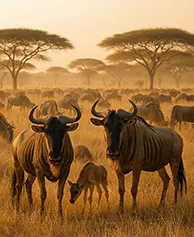
Animals must time migration, breeding, hibernation, and the raising of young with windows of temperature, rainfall, and food availability. Even human societies — especially in agricultural history — have measured months and planned work by the Moon’s repeating phases. The Moon’s faithful course therefore reinforces the
steadiness that allows life on land to plan, adapt, and endure.
The Gravitational Embrace:
Tides That Feed the Land
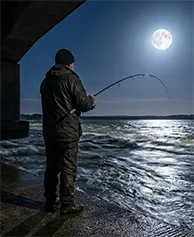
The most visible signature of the Moon’s influence is the tide. Through its gravitational pull, the Moon draws Earth’s oceans into gentle bulges, producing the rhythmic rise and fall of sea level as Earth rotates. This movement is not only a marine phenomenon. It continually renews the living boundary where ocean meets land — estuaries, tidal rivers, salt marshes, mangrove forests, lagoons, and mudflats — some of the most productive 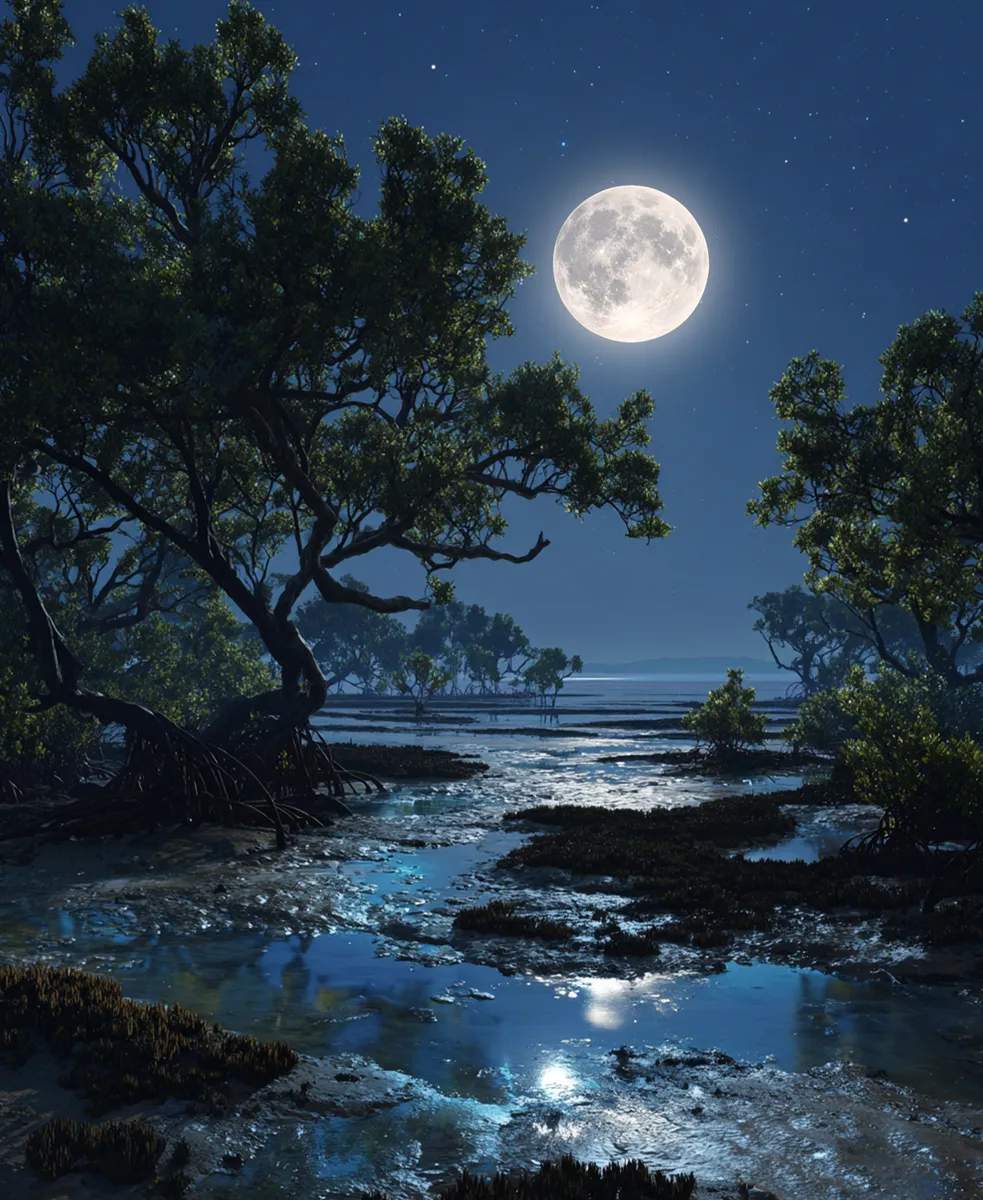 ecosystems on Earth.
With every tidal cycle, nutrient-rich waters flush river mouths and bays, delivering oxygen, redistributing sediments, and sustaining food chains that extend from sea to land. Shorebirds feed where the
tide exposes flats; juvenile fish find refuge in estuaries that support coastal fisheries; crabs and 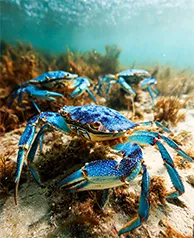 invertebrates recycle nutrients that enrich marsh vegetation; mangroves and salt marshes stabilize shorelines and reduce storm damage. In many regions, these tidal environments also store carbon and filter water, shaping terrestrial health as directly as they shape coastal waters.
Where Land and Sea Meet in God’s Design
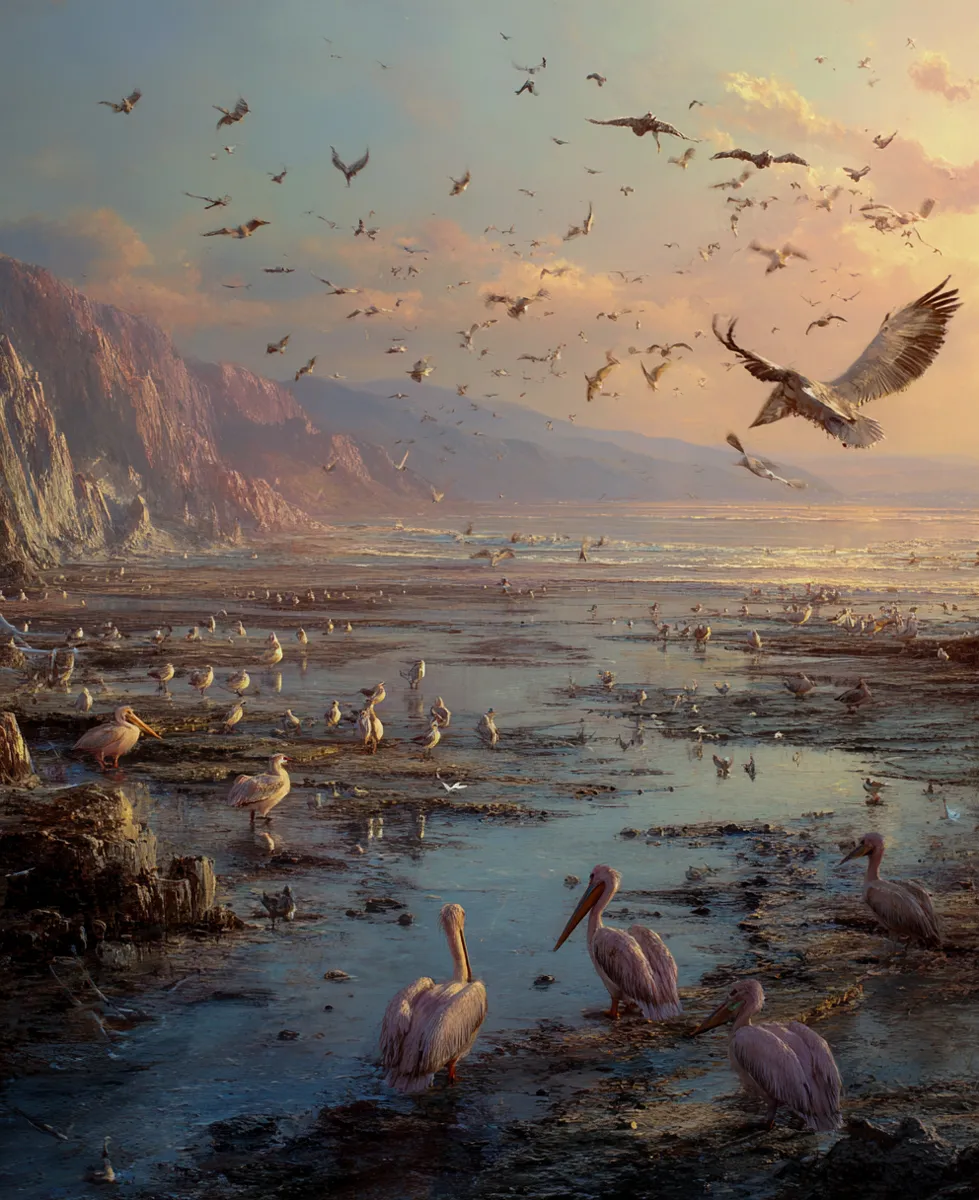
From the beginning, these coastal and intertidal regions were established as purposeful boundary zones, designed to function under regular cycles of immersion and exposure. Their structure and rhythm support organisms uniquely suited to these conditions, allowing land and sea to interact in a balanced and life-sustaining way. Through the Moon’s steady gravitational influence,